

How to check the remaining capacity of a wall mounted LFP battery?
Mar 04, 2026
Leave a message
Lithium Iron Phosphate (LFP) batteries have gained significant popularity in recent years, especially in the context of wall-mounted energy storage solutions. As a leading supplier of Wall Mounted LFP Batteries, I often receive inquiries from customers about how to check the remaining capacity of these batteries. In this blog post, I will delve into the various methods available for checking the remaining capacity, providing you with the knowledge you need to manage your energy storage effectively.
Why Checking Remaining Capacity is Crucial
Before we explore the methods, it's important to understand why checking the remaining capacity of a wall-mounted LFP battery is so crucial. For households and businesses relying on these batteries for backup power or to store renewable energy, knowing the remaining capacity helps in planning energy usage. It allows you to make informed decisions about when to use stored energy, when to recharge the battery, and how to optimize your energy consumption to avoid power shortages.
Methods to Check the Remaining Capacity
1. Battery Management System (BMS) Readings
Most modern wall-mounted LFP batteries are equipped with a Battery Management System (BMS). The BMS is an intelligent system that monitors and manages the battery's performance, including its state of charge (SOC). The SOC is a measure of the remaining capacity of the battery, expressed as a percentage of its total capacity.
To check the remaining capacity using the BMS, you can usually access the information through a built-in display on the battery unit itself. Some advanced BMS systems also allow remote monitoring via a smartphone app or a web interface. This feature is particularly useful as it enables you to check the battery's status from anywhere, at any time.
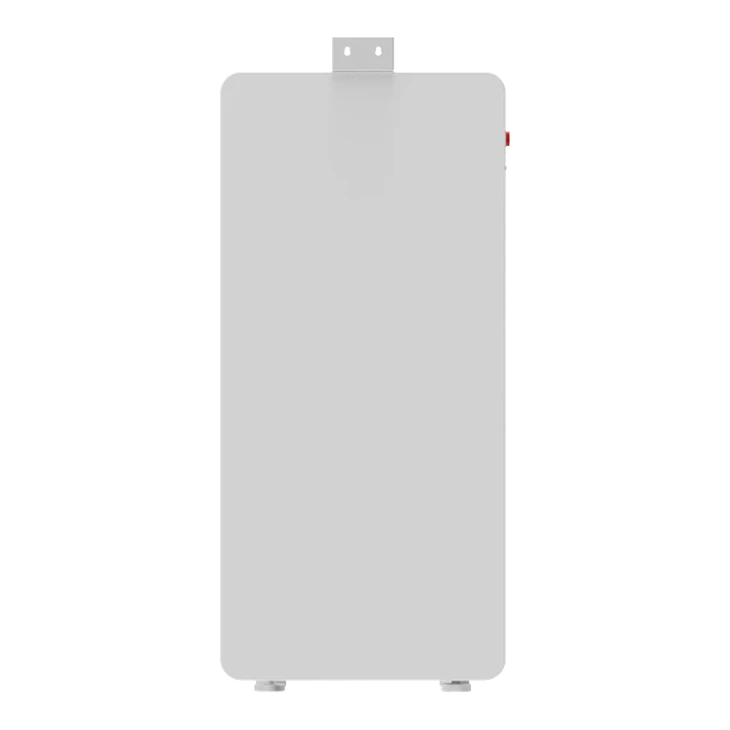
For example, if you have our 15KWH Household Energy Storage Battery, the BMS will provide accurate and real-time information about the remaining capacity. This allows you to plan your energy usage based on the available power, ensuring that you have enough energy when you need it.
2. Voltage Measurement
Another method to estimate the remaining capacity of a wall-mounted LFP battery is by measuring its voltage. The voltage of an LFP battery is directly related to its state of charge. As the battery discharges, its voltage gradually decreases, and as it charges, the voltage increases.
However, it's important to note that the relationship between voltage and SOC is not linear for LFP batteries. The voltage remains relatively stable over a wide range of SOC, and then drops more rapidly as the battery approaches full discharge. Therefore, voltage measurement alone may not provide a very accurate estimate of the remaining capacity, especially in the middle range of SOC.
To measure the voltage, you can use a multimeter. Simply connect the multimeter to the battery terminals, following the manufacturer's instructions. Once you have the voltage reading, you can refer to the battery's voltage-SOC curve, which is usually provided in the product manual, to estimate the remaining capacity.
For instance, our 51.2V 100AH Wall Mounted Energy Storage Battery has a specific voltage-SOC curve. By measuring the voltage and referring to this curve, you can get a rough idea of the remaining capacity.
3. Coulomb Counting
Coulomb counting is a more accurate method for measuring the remaining capacity of a battery. This method involves measuring the amount of charge flowing in and out of the battery over time. The BMS in modern wall-mounted LFP batteries often uses coulomb counting to calculate the SOC.
The basic principle of coulomb counting is to integrate the current flowing through the battery over time. This provides an accurate measure of the charge that has been added or removed from the battery. By comparing the current charge with the battery's total capacity, the BMS can calculate the SOC.
One advantage of coulomb counting is that it is not affected by factors such as temperature or aging, which can affect the relationship between voltage and SOC. However, it requires an accurate current sensor and careful calibration to ensure accurate results.
Our 51.2V 280AH Lithium Iron Phosphate Battery utilizes advanced coulomb counting technology in its BMS, providing accurate and reliable SOC readings.
Factors Affecting the Accuracy of Capacity Measurement
It's important to be aware that several factors can affect the accuracy of the remaining capacity measurement. These factors include temperature, battery aging, and the rate of charge and discharge.
- Temperature: Temperature has a significant impact on the performance of LFP batteries. At low temperatures, the battery's capacity and output voltage may decrease, leading to inaccurate SOC readings. Conversely, high temperatures can also affect the battery's performance and the accuracy of the capacity measurement.
- Battery Aging: As the battery ages, its internal resistance increases, and its capacity decreases. This can cause the relationship between voltage, current, and SOC to change over time, affecting the accuracy of the capacity measurement.
- Rate of Charge and Discharge: The rate at which the battery is charged or discharged can also affect the accuracy of the SOC measurement. A high rate of charge or discharge can cause the battery's voltage to deviate from the normal voltage-SOC curve, leading to inaccurate readings.
Tips for Maintaining Accurate Capacity Measurement
To ensure the accuracy of the remaining capacity measurement, it's important to follow these tips:
- Keep the battery at an optimal temperature: Try to maintain the battery at a temperature between 20°C and 30°C, as this is the optimal temperature range for LFP batteries.
- Monitor the battery's health: Regularly check the battery's voltage, current, and temperature to detect any signs of aging or abnormal behavior.
- Use the battery as recommended: Follow the manufacturer's instructions for charging and discharging the battery to avoid overcharging or over-discharging, which can damage the battery and affect the accuracy of the capacity measurement.
Conclusion
Checking the remaining capacity of a wall-mounted LFP battery is essential for effective energy management. By using the methods outlined in this blog post, such as BMS readings, voltage measurement, and coulomb counting, you can accurately estimate the remaining capacity of your battery. However, it's important to be aware of the factors that can affect the accuracy of the measurement and take steps to maintain accurate readings.

If you are interested in our Wall Mounted LFP Batteries or have any questions about checking the remaining capacity, please do not hesitate to contact us for further information and to discuss your procurement needs. We are committed to providing high-quality energy storage solutions and excellent customer service.
References
- "Lithium Iron Phosphate Batteries: Technology and Applications" by Battery Council International
- "Battery Management Systems for Electric Vehicles" by Springer Publishing