

What is the voltage output of an indoor energy storage battery cabinet?
Nov 18, 2025
Leave a message
Hey there! As a supplier of Indoor Energy Storage Battery Cabinets, I often get asked about the voltage output of these nifty devices. So, let's dive right in and break it down.
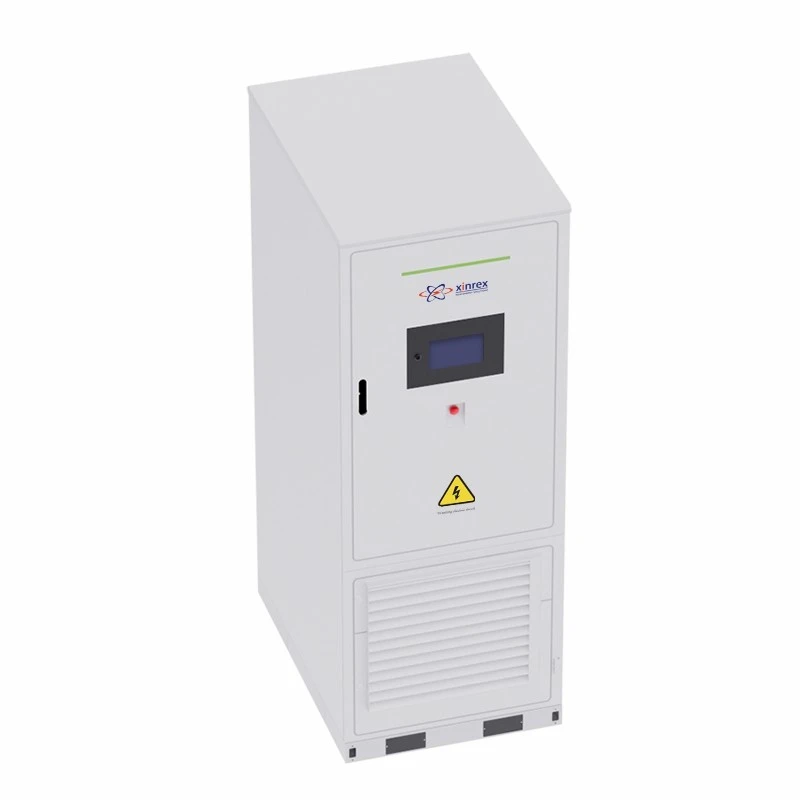
First off, what exactly is an indoor energy storage battery cabinet? Well, it's a system designed to store electrical energy for later use. It's like a big rechargeable battery on steroids, sitting quietly in your indoor space, ready to provide power when you need it. These cabinets are super useful for homes, offices, and small businesses, especially in areas where power outages are common or where you want to take advantage of off - peak electricity rates.
Now, let's talk about voltage output. Voltage is basically the "push" that makes electricity flow through a circuit. It's measured in volts (V). The voltage output of an indoor energy storage battery cabinet can vary quite a bit, depending on a few key factors.
One of the main factors is the type of battery cells used in the cabinet. Most indoor energy storage battery cabinets use lithium - ion batteries these days. Lithium - ion batteries come in different chemistries, such as lithium iron phosphate (LiFePO4), lithium cobalt oxide (LiCoO2), and lithium manganese oxide (LiMn2O4). Each of these chemistries has its own typical voltage range.
For example, a single LiFePO4 cell usually has a nominal voltage of around 3.2V. If you have a battery cabinet made up of multiple LiFePO4 cells connected in series, the voltage of the cabinet will be the sum of the voltages of all the individual cells. So, if you have a cabinet with 10 LiFePO4 cells connected in series, the nominal voltage of the cabinet would be 3.2V x 10 = 32V.
On the other hand, a single LiCoO2 cell has a nominal voltage of about 3.7V. So, a cabinet with 10 LiCoO2 cells connected in series would have a nominal voltage of 3.7V x 10 = 37V.
Another factor that affects the voltage output is the state of charge (SOC) of the battery. When a battery is fully charged, its voltage is higher than when it's partially or fully discharged. For instance, a LiFePO4 cell might have a voltage of around 3.6V when fully charged and drop to about 2.5V when fully discharged. So, the voltage output of the entire battery cabinet will also vary within a certain range as the battery charges and discharges.
The design of the battery management system (BMS) in the cabinet also plays a role. The BMS is like the brain of the battery cabinet. It monitors and controls the charging and discharging processes to ensure the safety and longevity of the batteries. Some BMSs are designed to maintain a relatively stable voltage output within a certain range, while others might allow for more variation depending on the application.
In general, indoor energy storage battery cabinets can have voltage outputs ranging from a few dozen volts to several hundred volts. For small - scale residential applications, you might see cabinets with voltage outputs in the range of 24V to 48V. These are often used to power things like home solar systems or small backup power setups.
For larger commercial or industrial applications, the voltage output can be much higher. You could have cabinets with voltage outputs of 200V, 400V, or even more. These high - voltage cabinets are used to power larger electrical loads, such as industrial machinery or large office buildings.
Let's take a look at some of the products we offer. We have a 200kWH Battery Energy Storage option that can be customized to have different voltage outputs depending on your specific needs. This large - capacity battery storage system is great for medium - to large - scale applications.
If you're looking for something for outdoor use, we also have an Outdoor Energy Storage Battery Cabinet. But today, we're focusing on our indoor options. Our Indoor Energy Storage Battery Cabinet comes in various configurations, each with its own voltage output characteristics.
When choosing the right voltage output for your indoor energy storage battery cabinet, you need to consider the electrical loads you want to power. You need to make sure that the voltage of the cabinet is compatible with the voltage requirements of your appliances, equipment, or electrical systems. For example, if you want to power a 24V DC device, you'll need a battery cabinet with a 24V output.
It's also important to think about the future expansion of your electrical system. If you plan to add more appliances or equipment in the future, you might want to choose a battery cabinet with a higher voltage output that can handle the increased load.
So, in conclusion, the voltage output of an indoor energy storage battery cabinet can vary widely depending on the type of battery cells, the state of charge, the BMS design, and the specific application. As a supplier, we can help you choose the right voltage output for your needs. Whether you're a homeowner looking for a small backup power solution or a business owner in need of a large - scale energy storage system, we've got you covered.
If you're interested in learning more about our indoor energy storage battery cabinets or have any questions about voltage output or other technical aspects, don't hesitate to reach out. We're here to help you make the best decision for your energy storage needs. Let's start a conversation and see how we can work together to meet your power requirements.
References
- Battery University: A comprehensive resource on battery technology and related topics.
- Lithium - ion Battery Industry Reports: Provide in - depth information on the latest trends and developments in lithium - ion battery technology.