

What is the maximum discharge current of server rack lithium iron phosphate batteries?
Jan 12, 2026
Leave a message
As a supplier of Server Rack Lithium Iron Phosphate Batteries, I often get asked about the maximum discharge current of these batteries. In this blog post, I'll delve into the concept of maximum discharge current, its influencing factors, and how our products perform in this aspect.
Understanding Maximum Discharge Current
The maximum discharge current refers to the highest current that a battery can safely and effectively deliver during a discharge process. It's a crucial parameter, especially for applications like server racks, where the battery needs to provide a stable and reliable power supply under sudden high - load conditions.
When a battery discharges, it converts stored chemical energy into electrical energy. However, if the discharge current is too high, it can cause several problems. Firstly, excessive heat generation can occur. High - current discharge leads to increased internal resistance losses, which in turn generate heat. If the heat is not dissipated properly, it can damage the battery's internal structure, reduce its lifespan, and even pose safety risks such as thermal runaway. Secondly, high - current discharge may also result in a rapid drop in battery voltage, leading to an unstable power supply for the connected devices.
Factors Affecting the Maximum Discharge Current
Battery Chemistry and Design
Lithium iron phosphate (LiFePO₄) chemistry is known for its relatively high discharge capabilities compared to some other battery chemistries. The structure of LiFePO₄ allows for a more efficient movement of lithium ions during the discharge process. Our Server Rack Lithium Iron Phosphate Battery is designed with a specific electrode structure and electrolyte formulation to optimize the ion flow and thus enhance the discharge performance.
The number of cells connected in parallel and series also plays a significant role. Connecting cells in parallel increases the total current - carrying capacity, as the current is divided among the parallel - connected cells. In contrast, series connections increase the total voltage. Our battery packs are carefully configured to balance between voltage and current requirements, ensuring an optimal maximum discharge current.
Temperature
Temperature has a profound impact on the maximum discharge current of LiFePO₄ batteries. At low temperatures, the mobility of lithium ions decreases, and the internal resistance of the battery increases. This makes it more difficult for the battery to deliver a high - current discharge. As a result, the maximum discharge current is significantly reduced.
On the other hand, at high temperatures, although the ion mobility increases, there are also concerns about thermal stability. High - temperature operation can accelerate the aging process of the battery and increase the risk of safety issues. Our Server Rack Lithium Iron Phosphate Batteries are designed with built - in thermal management systems to maintain an optimal temperature range, ensuring a stable maximum discharge current under various environmental conditions.
Battery State of Charge (SOC)
The state of charge of the battery also affects its maximum discharge current. When the battery is fully charged, it generally has a higher maximum discharge current capability. As the battery discharges and the SOC decreases, the internal resistance may increase, and the maximum discharge current gradually decreases.
Maximum Discharge Current of Our Server Rack Lithium Iron Phosphate Batteries
Our company has developed a series of high - performance Server Rack Lithium Iron Phosphate Batteries. For example, our 5KWH Rack Mount Lithium Battery is designed to meet the high - power requirements of server racks. It can provide a relatively high maximum discharge current, which is carefully calibrated according to the design specifications.
Under normal operating conditions (around 25°C and a moderate SOC), the 5KWH Rack Mount Lithium Battery can achieve a maximum discharge current that is sufficient to support the sudden power surges in server rack applications. The 51.2V Rack Mount LiFePO₄ Battery in our product line also has excellent discharge performance. Its maximum discharge current is designed to ensure stable power delivery to the server rack systems, even during peak usage periods.

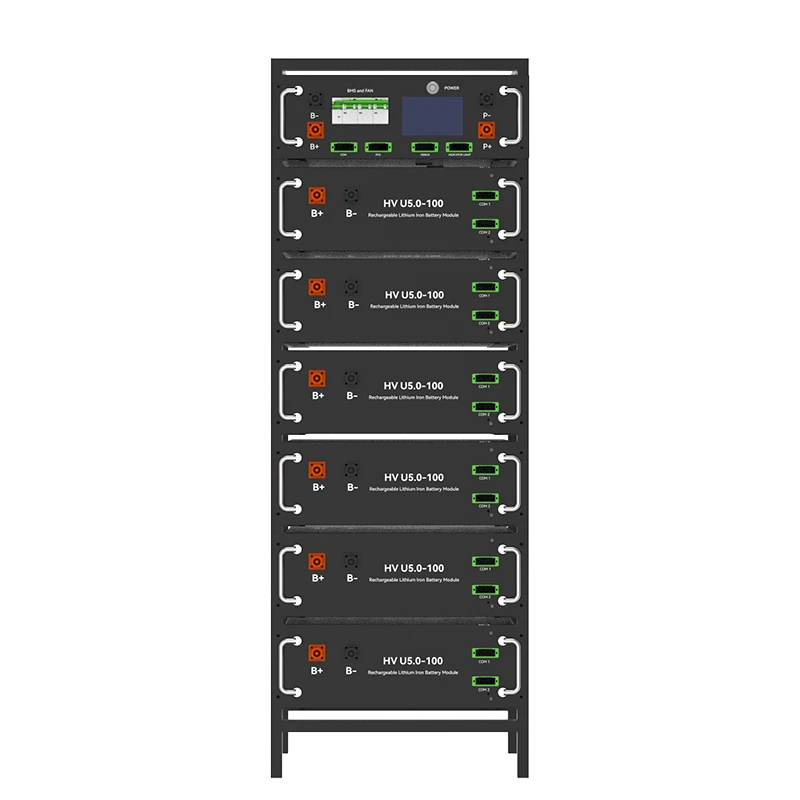
We use advanced battery management systems (BMS) in our products. The BMS continuously monitors the battery's parameters, including voltage, current, temperature, and SOC. It can automatically adjust the discharge current to prevent over - discharge, over - current, and over - temperature conditions. This not only protects the battery but also ensures that the maximum discharge current is utilized safely and efficiently.
Importance of Maximum Discharge Current in Server Rack Applications
In a server rack environment, reliable power supply is of utmost importance. Servers often experience sudden spikes in power demand, for example, during data processing peaks or when multiple servers are booted simultaneously. A battery with a high maximum discharge current can quickly respond to these power surges and provide the necessary energy, preventing server outages and data loss.
Moreover, in a backup power scenario, such as during a power outage, the server rack needs to be powered for a certain period of time. The battery's ability to deliver a high - current discharge at the beginning of the outage is crucial for maintaining the normal operation of the servers until alternative power sources can be activated.
How We Ensure High - Quality Maximum Discharge Current Performance
To ensure that our Server Rack Lithium Iron Phosphate Batteries deliver a high - quality maximum discharge current performance, we implement strict quality control measures throughout the manufacturing process. We source high - quality raw materials, including lithium iron phosphate powder, electrodes, and electrolytes. Our production lines are equipped with advanced manufacturing equipment and technologies to ensure the uniformity and stability of the battery cells.
In addition, we conduct extensive testing on our batteries. Each battery pack undergoes rigorous testing for its maximum discharge current, capacity, voltage, and other electrical parameters. We also perform long - term cycling tests to simulate real - world usage scenarios and ensure the battery's reliability and durability over time.
Contact Us for Procurement and Discussion
If you are interested in our Server Rack Lithium Iron Phosphate Batteries or have questions about their maximum discharge current performance, we encourage you to contact us for procurement and further discussion. We have a professional team of experts who can provide you with detailed product information, technical support, and customized solutions based on your specific requirements.
References
- "Lithium - Ion Batteries: Science and Technologies" by Guoxiu Wang, High - Tae Jung, and Jaekook Kim.
- Technical documents from relevant battery industry standards organizations.